Participating notary offices

Tesora organizes.
Your notary certifies.

You build the map of what you own. The notary office certifies that it exists and since when. Nobody assigns you one: you choose, including the one you already know.

6 questions · 3 minutes · no sign-up

What your notary office actually does with your inventory

Four things. None of them involves touching what you own.

Read this before the cards: the exact scope of the notarial certification of facts is being validated with a notary before it becomes a commercial promise. What already works and what does not yet, named plainly, in feature status.

It will be able to certify that it exists

Under review

The design is for the notary office to certify that your inventory exists and from what date. It would not opine on what you own, and it would not appraise it: it would certify that it is there. The exact scope is being validated with a notary.
It comes in as a reader, never as an owner

Your vault lives in your own Google Drive account. You share read-only access with the notary office: it sees, it never edits, it cannot delete. And you take that access away whenever you want.

That access lasts only while you live

The read permission is yours and it ends with you. After that, the executor you named in your will takes over, and the notary office does what it has always done: the succession.

And you pick which one

No notary office is assigned to you. You can use the one you already know: if you want, it can be invited into the program. No exclusivity, no territories handed out.

The other three —read-only access, valid only while you live, and you choosing the notary office— depend on how Tesora is built, not on the certification program: they work from day one.

A treasure nobody can find is a buried treasure. Tesora is the map.

The key to the map

You and your notary office hold it. It only reads. You decide what it sees, when, and until when.

The keys to the treasure

Still only yours. Tesora records what you own and where it is. Never how to get in.

Zero passwords, zero PINs, zero recovery phrases. Not in your inventory, not in the vault, not at the notary office.

How we protect your information

Who does what

Your inventory, on its own, is not a legal act and does not replace your will. What it does is make the acts that are legal happen well, and fast.

What Tesora does and what the notary office does
TaskTesoraYour notary office
Build your inventory: what you own, where it is, who knows about itYesNo
Structure your vault inside your own Google DriveYesNo
Flag what you still owe yourself and rank it by urgencyYesNo
Prepare the package for your appointmentYesNo
Certify with notarial authorityNoYes. That is its job
Execute your willNoYes
Handle the succession when the time comesNoYes
Legal advice on your caseNoYes
Charge the fee for the actNo. No commission eitherYes, directly with you

Notarial authority is granted by the State. Nobody touches that, and neither does Tesora.

Participating notary offices

Today there is one: Notaría 107 in León, the first to close its certification. The program stays open and grows city by city.

León, Guanajuato

Notaría Pública No. 107 del Estado de Guanajuato

Certified notary office Founding office of the program

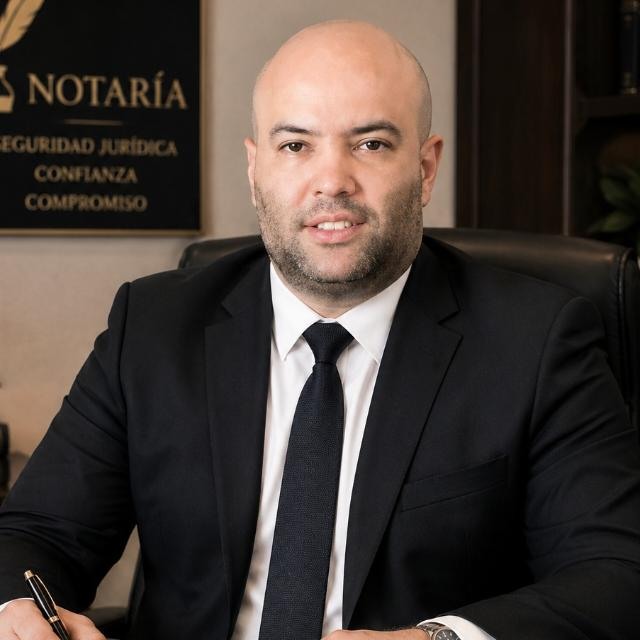
The first notary office to join — and the one that agreed to be the founding office of the program. The standard is being reviewed with the notarial judgment of Lic. Alfonso Montemayor Cornejo before the pilot opens: every certification rule goes through his pen first.

Portrait of Lic. Alfonso Montemayor Cornejo, Notaría Pública 107 in León

Lic. Alfonso Montemayor Cornejo

Notary Public · Head of the office

Published with his written authorization.

City
León de los Aldama, Guanajuato
Notary office number
107
At the head of the program
Lic. Alfonso Montemayor Cornejo
Status in the program
Founding participant
Certification
Active · revalidated every year

See their new site

Verify it on their official site

The new site is a preview under construction, built with the notary office. To check them with someone other than us, go to their official site.

Certification active, revalidated every year: the day it stops being active, this entry will say so. Full status in feature status.

Your city

The program grows city by city. Until a notary office closes its certification, it does not appear here — and that is the whole guarantee this directory can give you today.

Already have a notary office you trust? Use it. Your inventory works the same at any notary office in the country. And if you want, invite them into the program: it is open.

Information for notary offices

What “founding” means — and what it does not

  • Founding is a date, not a rank. It gives no territorial exclusivity and no preference in the directory.
  • The standard and the platform belong to Tesora. Coming in first does not make it the author or the owner of anything.
  • No client is required to work with it. You choose your notary office. Always.
  • Every office enters under the same agreement and the same terms.

The notary office sets the fee and charges it. Directly with you.

No fine print here, and no percentage hidden in the middle.

  • Each notary office sets its own fee depending on the act, and charges it directly with you. Ask before the appointment: it is their rate, not ours.
  • Tesora charges the notary office no commission and takes no part of its fee. Not one peso, in either direction.
  • Notarial acts and fees are not included in any Tesora plan. They are separate and paid separately.
  • Changes that later go through a notary —changing heirs, percentages or executor— are the notary office's fees, settled directly with them.

See what Tesora charges

What to bring to your appointment so it pays off

The difference between an appointment that moves forward and one that starts from zero is a complete list.

What Tesora prepares for you

  • Your Asset File as a PDF, ordered by blocks. It is generated in Spanish, the way your notary office needs it.
  • Your map of what is still open: what is missing, ranked by what costs the most to lose.
  • Who executes: your support network and who is responsible for what.
  • Your Love Letter, if you decide to leave one. It is the emotional layer of the legacy, not a legal instrument.

What is worth having on hand

  • ID and base documents.
  • Real estate: deeds, property tax, contracts.
  • Cars and other vehicles: invoices and vehicle tax receipts.
  • Collections and valuables: certificates, provenance, and why each piece is worth what it is worth.
  • Furniture and equipment of value: what it is and where it is.
  • Accounts, investments and retirement savings: at which institutions.
  • Company or shareholding: articles of incorporation and who keeps them.
  • Trademarks, patents and rights: registrations, patents, copyrights, licenses and royalties. Whose name they are in and when they renew.
  • Domains and online store: where they are managed and when they renew.
  • Crypto: that it exists and where the backup is. Never the backup itself.
  • Files and photos: which account or drive they live in.

Never bring passwords, PINs or recovery phrases. Not to the appointment, not to the inventory, not to the vault. What gets recorded is where the backup is, never how to get in.

Start by knowing what you are missing.

Three minutes. Six questions. Without handing over a single personal detail. With that in hand, the appointment with your notary office is worth twice as much.

Get my free diagnostic

6 questions · 3 minutes · no sign-up

Are you a notary office and interested in the program? Here are the details.

Get my free diagnostic